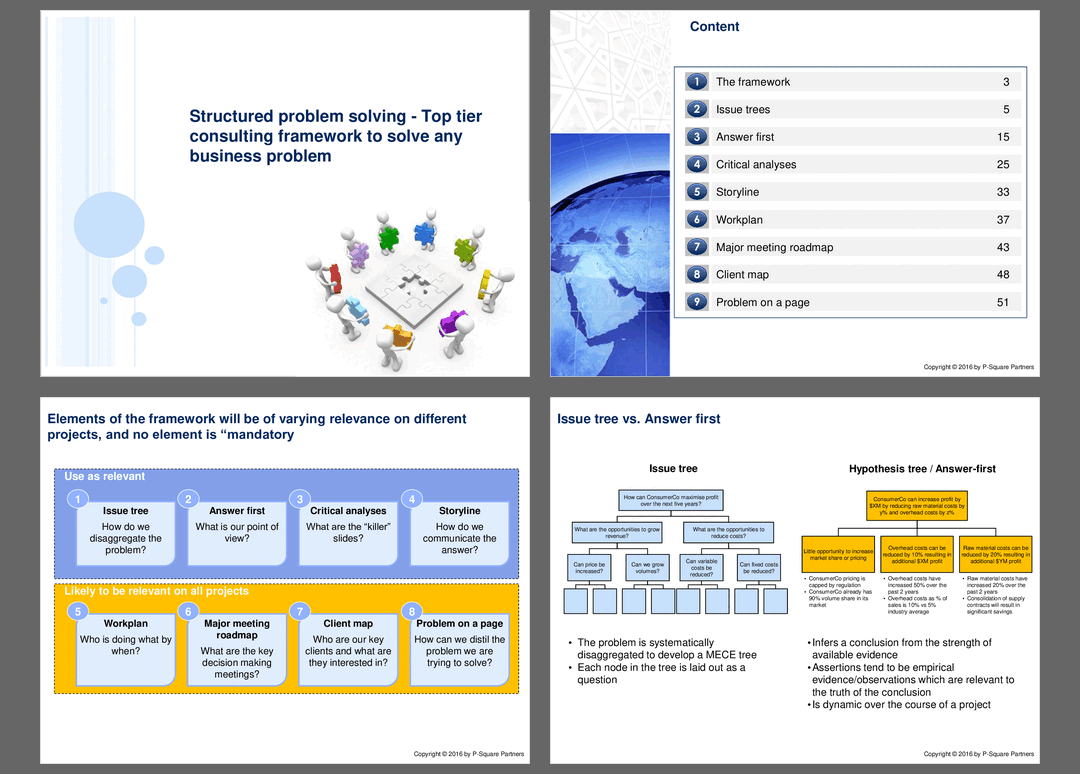

Practical guide to solve strategic business problems
Framework that has been tested at a top tier consulting firm and investment bank
Numerous examples to help better understand key concepts
PROBLEM SOLVING PPT DESCRIPTION
Editor Summary
Structured Problem Solving - Top Tier Consulting Framework is a 57-slide PowerPoint by P-Square Partners that presents a consulting-grade problem-solving approach akin to methods used at McKinsey, Bain, or BCG (consulting-grade; not affiliated).
Read moreIncludes templates and tools: Issue Tree, Answer First, Critical Analyses, Storyline, Workplan, Major Meeting Roadmap, Client Map, and Problem on a Page. Target users include corporate executives, consultants, project managers, and strategy teams. Available on Flevy with immediate digital download.
Use this deck when teams must dissect complex strategic problems, align stakeholders, or prepare structured presentations for major decision points. It is suited for initial project kick-offs, strategy workshops, and pre-client-meeting preparations.
Corporate executives developing a concise Problem on a Page to brief a board or steering committee.
Management consultants building MECE issue trees to disaggregate client problems and prioritize analyses.
Project managers creating a Workplan and Major Meeting Roadmap to track activities, owners, and decision points.
Strategy teams drafting an Answer First hypothesis and Storyline to structure client recommendations.
The framework’s emphasis on MECE issue trees, hypothesis-driven Answer First, and structured storylines follows problem-solving practices associated with McKinsey, Bain, and BCG.
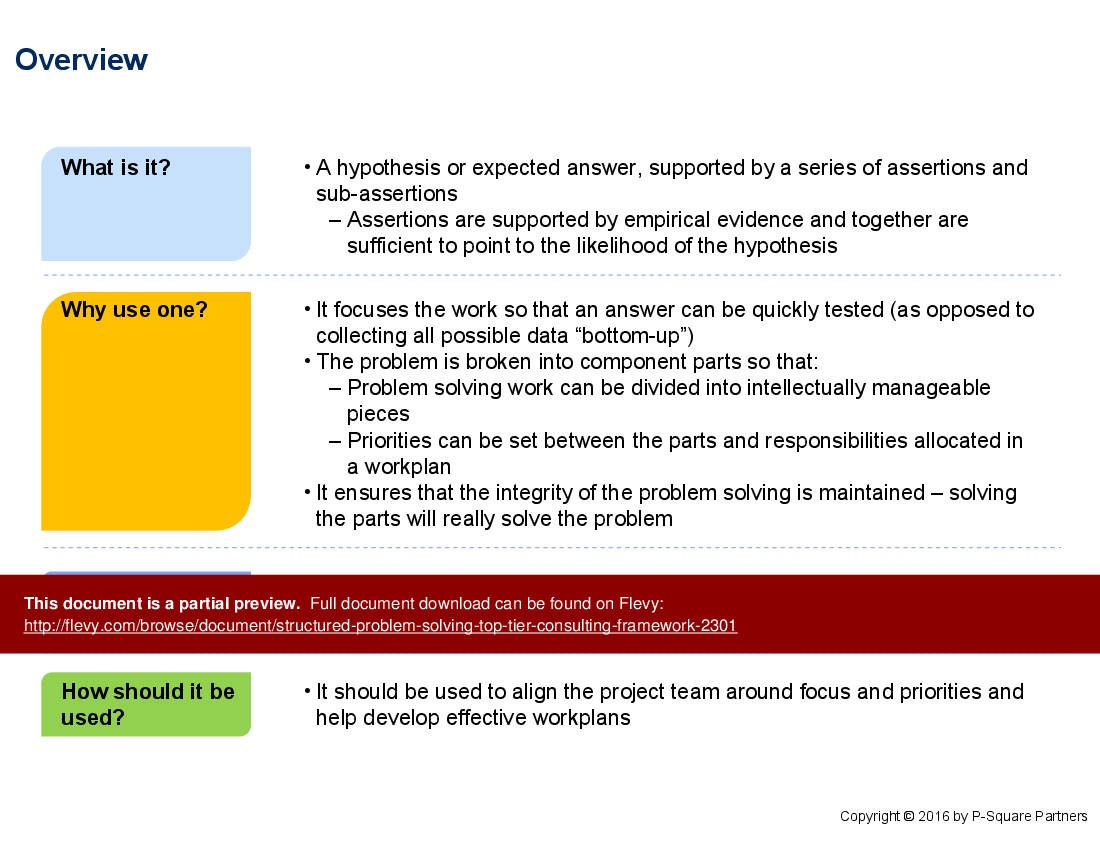
This document provides a practical guide to structured problem solving. It will help you solve strategic problems that your business face. The document provides a framework that has been tested for many years at a top tier consulting firm and investment bank. There are numerous examples given to enable better understanding of the concepts.
The document is structured as follow:
• The framework
• Issue trees
• Answer first
• Critical analyses
• Storyline
• Workplan
• Major meeting roadmap
• Client map
• Problem on a page
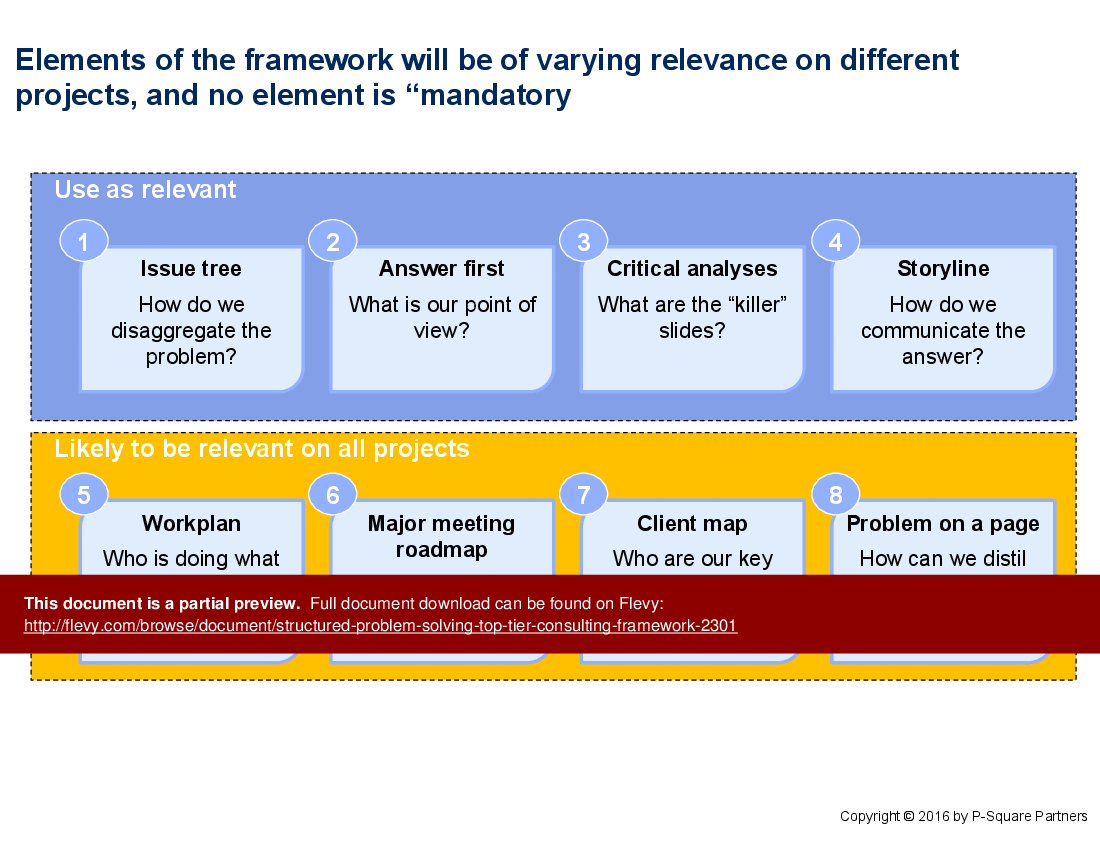
The framework outlined in this PPT is designed to be adaptable, recognizing that different projects may require different elements. The use of issue trees, answer-first approaches, critical analyses, and storylines are emphasized for their relevance to specific project needs. This flexibility ensures that the framework can be tailored to the unique challenges of any strategic problem.
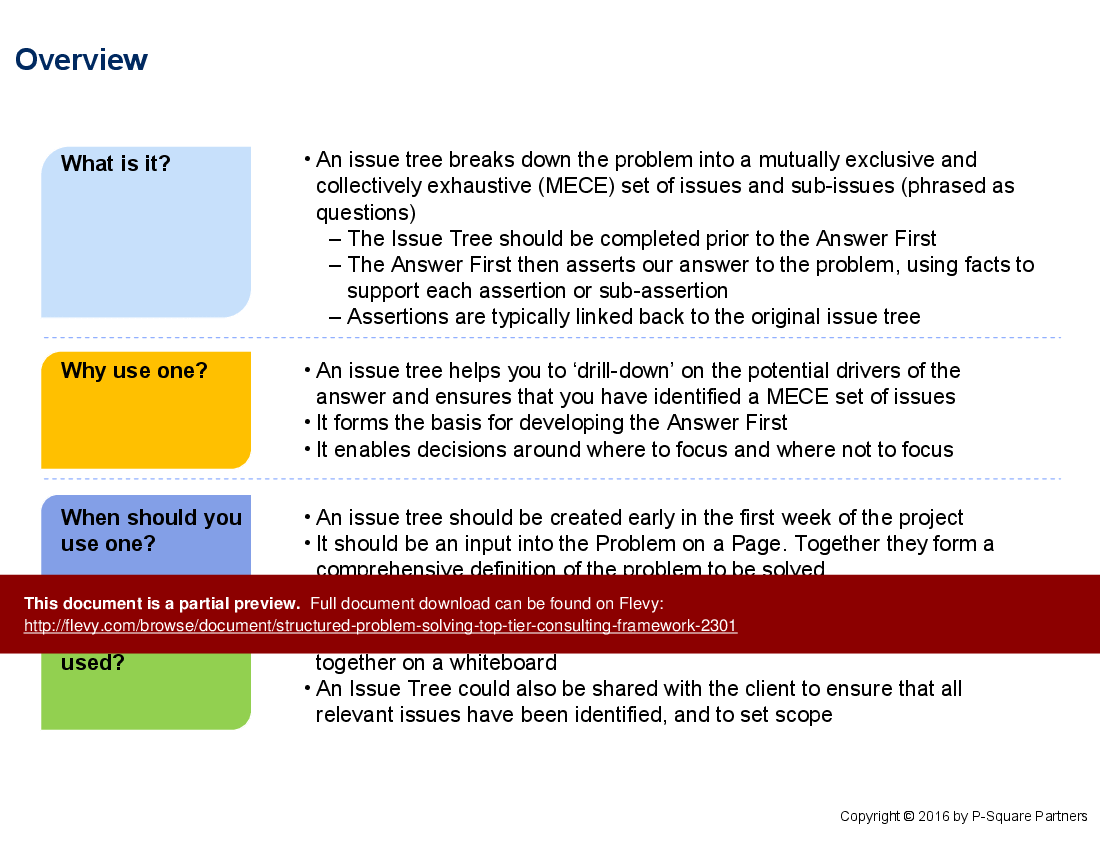
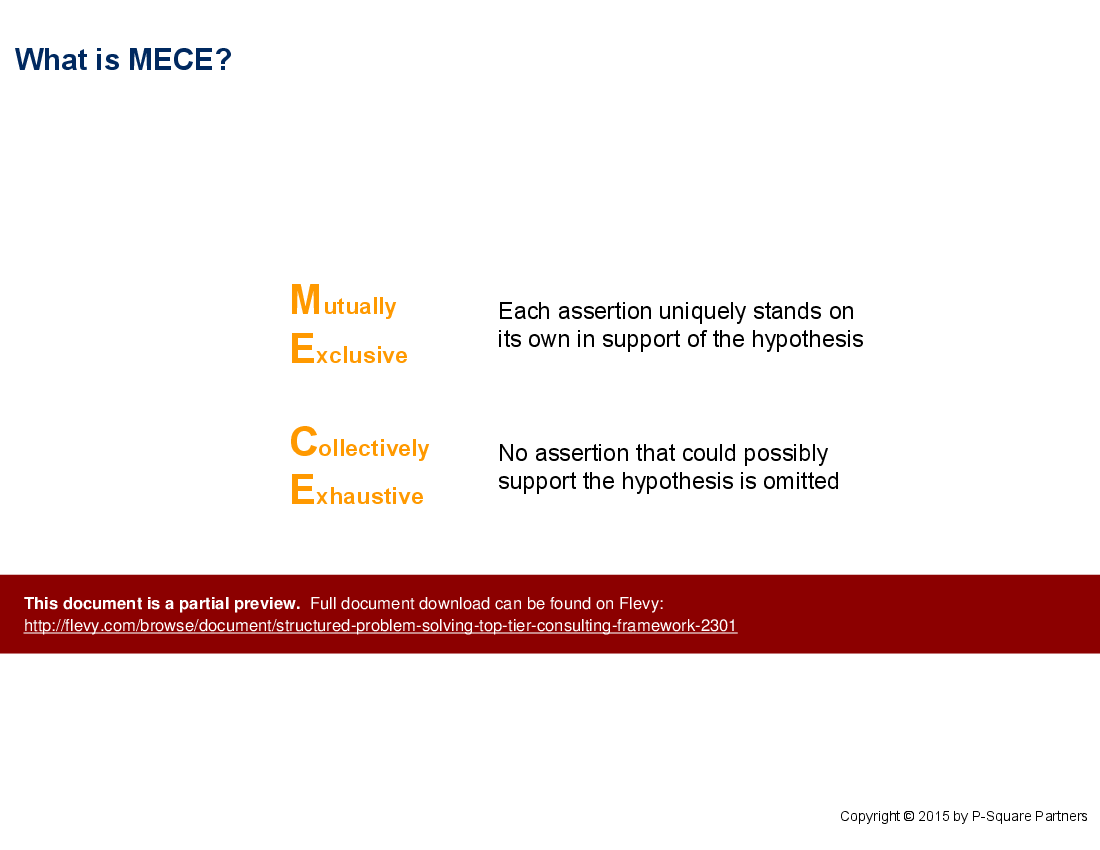
An issue tree is a critical tool for breaking down complex problems into manageable components. By identifying mutually exclusive and collectively exhaustive (MECE) sets of issues, the issue tree helps in pinpointing the root causes and structuring the problem-solving process. This methodical approach ensures that all potential drivers of the problem are considered, enabling focused and effective solutions.
The document also provides practical guidance on developing a major meeting roadmap, which is essential for maintaining project momentum and ensuring all stakeholders are aligned. This roadmap includes scheduling key meetings, identifying decision points, and ensuring that all necessary participants are engaged. By keeping the project team and stakeholders on the same page, the roadmap helps in driving the project to successful completion.
Got a question about the product? Email us at support@flevy.com or ask the author directly by using the "Ask the Author a Question" form. If you cannot view the preview above this document description, go here to view the large preview instead.
MARCUS OVERVIEW
This synopsis was written by Marcus [?] based on the analysis of the full 57-slide presentation.
Executive Summary
The "Structured Problem Solving - Top Tier Consulting Framework" presentation offers a comprehensive approach to tackling business challenges using proven methodologies akin to those employed by McKinsey, Bain, or BCG-quality consulting firms (consulting-grade; not affiliated). This framework equips users with the tools to dissect complex problems, formulate actionable insights, and effectively communicate solutions. By leveraging this structured approach, corporate executives and consultants will enhance their problem-solving capabilities, ensuring clarity and focus throughout the analytical process.
Who This Is For and When to Use
• Corporate executives seeking to refine their problem-solving methodologies
• Consultants aiming to enhance their analytical frameworks and deliverables
• Project managers responsible for guiding teams through complex business challenges
• Strategy teams focused on developing clear, actionable insights for stakeholders
Best-fit moments to use this deck:
• During initial project kick-offs to establish a clear problem-solving framework
• In strategy sessions where complex issues need to be dissected and addressed
• When preparing for critical client meetings to ensure structured communication of insights
Learning Objectives
• Define the structured problem-solving framework and its core components
• Build an issue tree to disaggregate complex problems into manageable parts
• Establish a clear point of view using the "Answer First" methodology
• Create critical analyses to support strategic recommendations
• Develop a compelling storyline for effective communication of insights
• Construct a detailed workplan to assign responsibilities and timelines
• Map major meetings to align stakeholders and drive decision-making
• Identify key clients and their interests to tailor communication strategies
• Summarize complex problems succinctly using the "Problem on a Page" tool
Table of Contents
• The Framework (page 3)
• Issue Trees (page 5)
• Answer First (page 15)
• Critical Analyses (page 25)
• Storyline (page 33)
• Workplan (page 37)
• Major Meeting Roadmap (page 43)
• Client Map (page 48)
• Problem on a Page (page 51)
Primary Topics Covered
• Issue Tree - A tool for breaking down complex problems into mutually exclusive and collectively exhaustive (MECE) components, facilitating focused analysis.
• Answer First - A hypothesis-driven approach that articulates the main point of view supported by assertions and evidence, streamlining the problem-solving process.
• Critical Analyses - An outline of essential analyses required to substantiate the proposed solutions, typically presented through mock-up slides.
• Storyline - A structured narrative that guides the presentation of findings, ensuring clarity and coherence in communication.
• Workplan - A high-level overview of project activities, timelines, and responsibilities, providing a roadmap for execution.
• Major Meeting Roadmap - A schedule of key decision-making meetings, ensuring alignment among stakeholders and facilitating effective communication.
• Client Map - A strategic tool to identify key clients and their interests, enhancing engagement and tailoring communication.
• Problem on a Page - A concise summary that encapsulates the problem definition, context, and key issues, serving as a reference point throughout the project.
Deliverables, Templates, and Tools
• Issue tree template for disaggregating complex problems
• Answer First framework to articulate hypotheses and assertions
• Critical analyses slide templates for presenting key findings
• Storyline outline for structuring presentations
• Workplan template for tracking project activities and responsibilities
• Major meeting roadmap for scheduling and aligning stakeholders
• Client map template to identify and engage key clients
• Problem on a Page template for summarizing project scope and objectives
Slide Highlights
• Overview of the structured problem-solving framework, illustrating key components
• Example of an issue tree demonstrating the disaggregation of a complex problem
• The "Answer First" slide showcasing how to articulate a clear point of view
• Critical analyses slide layout emphasizing the importance of supporting evidence
• Storyline example that outlines the logical flow of a presentation
• Workplan overview highlighting major activities and timelines
• Major meeting roadmap detailing key decision points and attendees
• Client map example identifying stakeholder roles and concerns
• Problem on a Page template summarizing project objectives and success criteria
Potential Workshop Agenda
Introduction to Structured Problem Solving (60 minutes)
• Overview of the framework and its components
• Discussion on the importance of structured problem solving
• Group exercise to create an issue tree
Developing the Answer First (90 minutes)
• Workshop on formulating hypotheses and assertions
• Team discussions to refine points of view
• Review of examples and best practices
Creating Critical Analyses and Storylines (120 minutes)
• Hands-on session to develop critical analyses slides
• Collaborative work on crafting compelling storylines
• Feedback and refinement of presentations
Customization Guidance
• Tailor the issue tree to reflect specific project challenges and client contexts
• Adjust the Answer First section to align with client expectations and industry standards
• Modify critical analyses to focus on relevant data and insights for the project
• Adapt the storyline to suit the audience and communication style of stakeholders
• Update the workplan to reflect actual timelines and resource allocations
• Personalize the client map to include specific client concerns and engagement strategies
Secondary Topics Covered
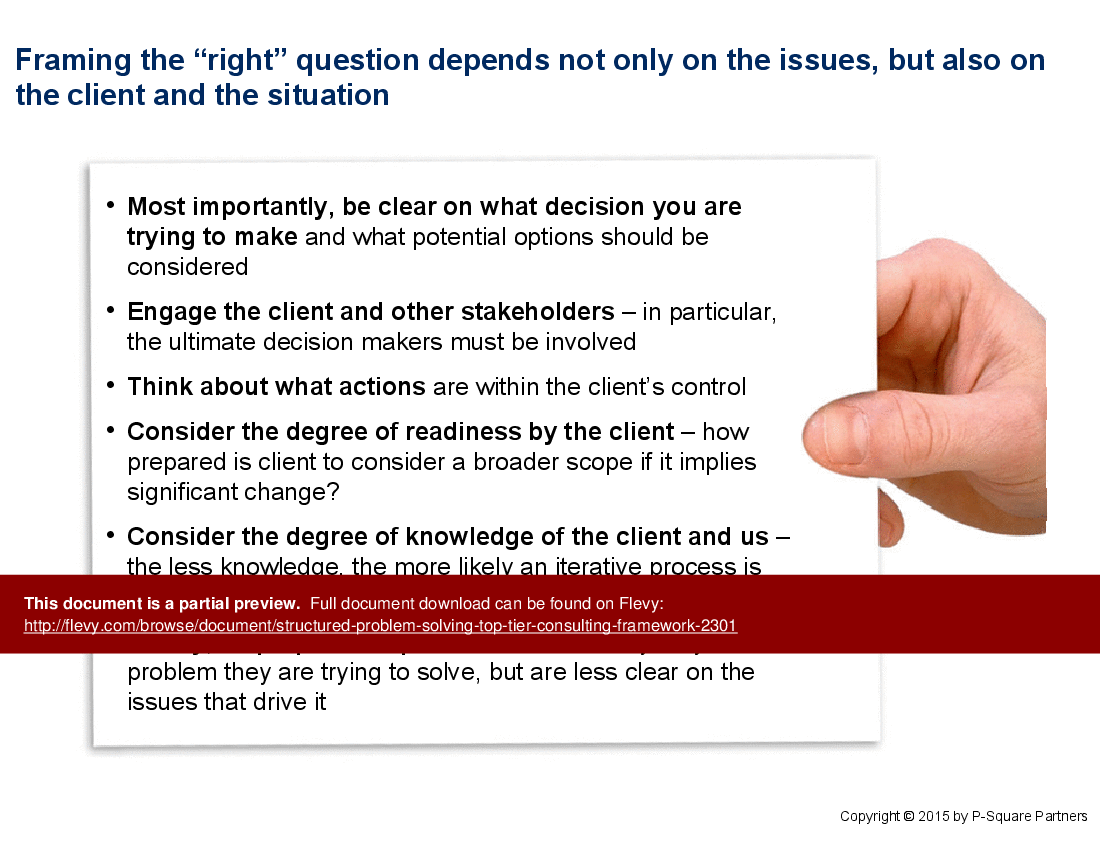
• Best practices for engaging clients in the problem-solving process
• Techniques for ensuring clarity and focus in presentations
• Strategies for managing project scope and preventing scope creep
• Insights on stakeholder management and communication
• Approaches for iterative refinement of analyses and hypotheses
Topic FAQ
What are the main components of a structured problem-solving framework I should expect to use?
A typical structured problem-solving framework breaks work into defined components to ensure clarity and rigor. Key components listed in this product include Issue Trees, Answer First, Critical Analyses, Storyline, Workplan, Major Meeting Roadmap, Client Map, and Problem on a Page, totaling eight named components.
How does an issue tree help break down complex problems for analysis?
An issue tree decomposes a complex problem into smaller, mutually exclusive and collectively exhaustive (MECE) parts, helping teams identify root causes and prioritize analyses. It provides a visual logic structure that supports focused data collection and hypothesis testing using an issue tree template.
What does the "Answer First" approach involve and why is it used?
"Answer First" is a hypothesis-driven method that states the main point of view up front and supports it with assertions and evidence, allowing teams to focus analysis on key uncertainties and communicate conclusions efficiently. The product documents this approach in the Answer First framework on page 15.
When choosing a structured problem-solving PPT template, what elements should I prioritize?
Prioritize templates that include tools for problem decomposition, hypothesis articulation, evidence-backed analyses, narrative construction, project execution, stakeholder alignment, and customization guidance. Look for concrete artifacts such as an Issue Tree template, Storyline outline, Workplan, and Major Meeting Roadmap to support execution in a 57-slide deck.
How should I think about the cost versus value of buying problem-solving templates?
Value from templates derives from reuse, reduced planning time, and proven structures adapted to your context; assess whether the set includes practical examples, customization guidance, and ready-to-use artifacts. The author notes the framework has been used in top-tier consulting and investment banking, and includes templates like Issue Tree and Problem on a Page.
I need to align stakeholders for an upcoming decision—what tools should I use to prepare?
Use a Major Meeting Roadmap to schedule decision points, define attendees and pre-meeting requirements, and pair it with a Client Map to map stakeholder interests and responsibilities. Combining those with a concise Problem on a Page helps focus discussions, specifically the Major Meeting Roadmap template.
How can I structure a client presentation so findings are clear and persuasive?
Start with an Answer First headline stating the recommendation, follow with a Storyline that sequences key findings and supporting evidence, and include Critical Analyses mock-up slides to substantiate claims. Close with a succinct Problem on a Page to summarize scope and success criteria using Answer First and Storyline templates.
Can this framework be adapted for workshops or training sessions, and what might a sample agenda look like?
Yes; the product includes a sample workshop agenda with timed modules for teaching the approach: an introductory 60-minute overview, a 90-minute session on developing Answer First, and a 120-minute session on creating Critical Analyses and Storylines, providing a concrete three-part agenda.
Document FAQ
These are questions addressed within this presentation.
What is the purpose of an issue tree?
An issue tree helps break down complex problems into manageable components, ensuring a structured approach to analysis and decision-making.
How does the "Answer First" methodology work?
The "Answer First" methodology articulates a hypothesis supported by assertions and evidence, allowing teams to focus their efforts on key issues.
What are critical analyses?
Critical analyses outline the essential pieces of analysis required to support strategic recommendations, typically presented through mock-up slides.
How can I create a compelling storyline?
A compelling storyline should provide a logical flow of information, integrating key findings and insights while addressing the audience's key questions.
What is included in a workplan?
A workplan includes a high-level map of project activities, timelines, responsibilities, and major milestones, guiding the team throughout the engagement.
How do I identify key clients?
Key clients can be identified through stakeholder mapping, focusing on their roles, concerns, and interests to tailor communication effectively.
What is the "Problem on a Page" tool?
The "Problem on a Page" tool is a concise summary that captures the problem definition, context, and key issues, serving as a reference throughout the project.
How often should I update the workplan?
The workplan should be treated as a living document, updated regularly to reflect changes in timelines, responsibilities, and project scope.
What are the main components of the major meeting roadmap?
The major meeting roadmap includes the project timeframe, key decisions/actions required, list of attendees, and pre-meeting preparations.
How do I ensure effective communication with clients?
Effective communication with clients involves understanding their concerns, tailoring messages to address their interests, and maintaining regular updates throughout the project.
Glossary
• Issue Tree - A visual representation that breaks down complex problems into manageable components.
• Answer First - A hypothesis-driven approach to articulate the main point of view.
• Critical Analyses - Key analyses required to support strategic recommendations.
• Storyline - A structured narrative guiding the presentation of findings.
• Workplan - A high-level overview of project activities and timelines.
• Major Meeting Roadmap - A schedule of key decision-making meetings.
• Client Map - A tool to identify key clients and their interests.
• Problem on a Page - A one-page summary of the problem definition and key issues.
• MECE - Mutually Exclusive and Collectively Exhaustive; a principle for structuring issues.
• Stakeholder - An individual or group with an interest in the project's outcome.
• Hypothesis - An educated guess or proposed explanation for a phenomenon.
• Assertions - Statements that support the hypothesis, backed by evidence.
• KPI - Key Performance Indicator; a measurable value that demonstrates how effectively a company is achieving its objectives.
• Scope Creep - The uncontrolled expansion of project scope without adjustments to time, cost, and resources.
• Engagement - The process of involving stakeholders in the project.
• Deliverables - Specific outputs or results produced as part of the project.
• Feedback Loop - A process where outputs of a system are circled back and used as inputs.
• Iterative Process - A method of refining and improving a product or process through repeated cycles.
• Stakeholder Management - The process of managing relationships with those who have an interest in the project.
This PPT slide outlines a structured workplan for a consulting engagement, divided into 4 phases: Diagnostic, Prioritisation and Alignment, Priority Opportunity Workstreams, and Implementation.
The "Diagnostic" phase includes 3 key activities: process review, customer review, and market fact-base and strategy review, essential for gathering insights and understanding the organization's current state.
The "Prioritisation and Alignment" phase features a Senior Management Workshop to align stakeholders on priorities and collaboratively address identified issues.
The "Priority Opportunity Workstreams" section highlights initiatives such as fact-based analysis, solution development, and planning, indicating a thorough methodology for tackling challenges.
The "Implementation" phase focuses on a program office and quick wins, emphasizing execution and achieving immediate results.
The overall engagement is scheduled for 6 to 8 weeks, with activities planned between August and September, reinforcing a methodical approach and clear deliverables.
This framework categorizes problem-solving elements into 2 sections: relevant components and universally pertinent elements. The first section includes 4 key components: "Issue tree" for breaking down problems, "Answer first" for early articulation of viewpoints, "Critical analyses" for identifying impactful insights, and "Storyline" for coherent communication of findings. The second section features 4 universally relevant elements: "Workplan" for outlining responsibilities and timelines, "Major meeting roadmap" for aligning stakeholders, "Client map" for understanding key clients, and "Problem on a page" for distilling core issues concisely. This structured approach allows teams to adapt based on project needs while ensuring clarity and focus.
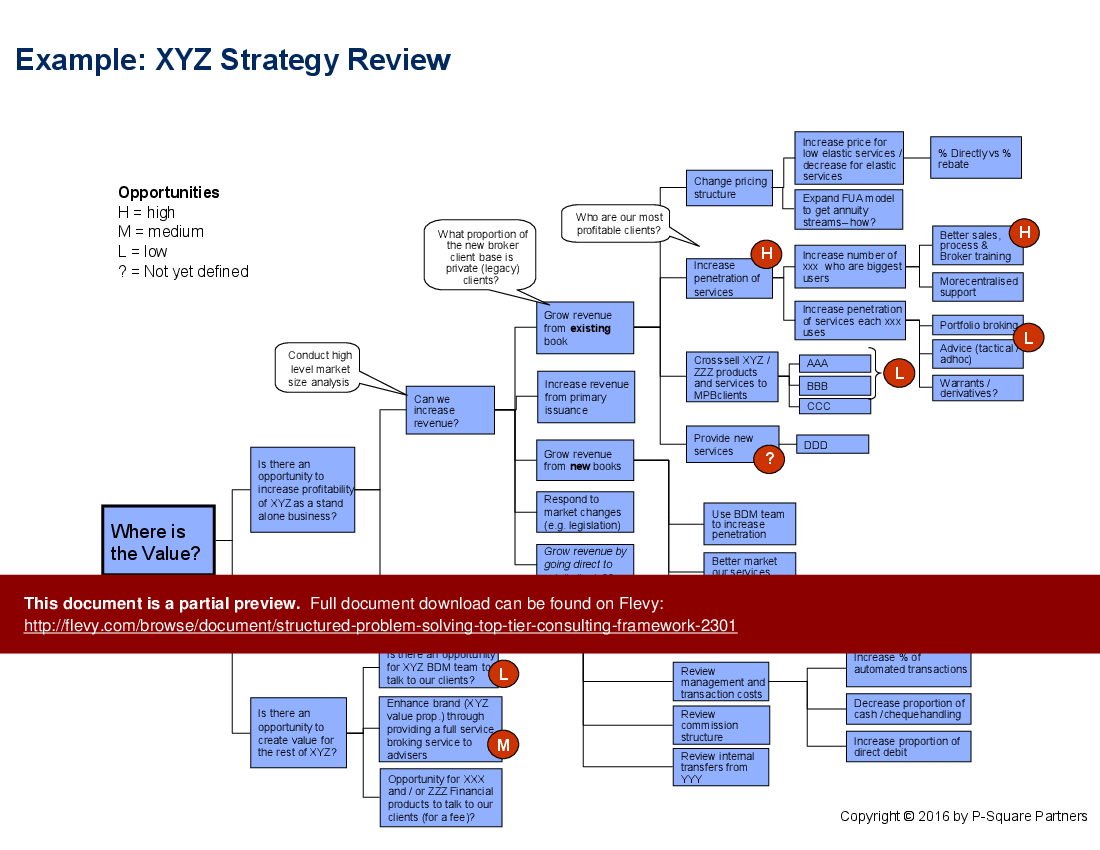
This PPT slide outlines a structured approach for evaluating strategic opportunities for XYZ, utilizing a flowchart to guide decision-making on value creation and revenue enhancement. The central question, "Where is the Value?", drives analysis of revenue streams and cost reduction strategies. The flowchart branches into increasing revenue and reducing costs, with inquiries and actionable steps. Revenue enhancement includes market size analysis, increasing service penetration, and adapting to market changes, emphasizing understanding the most profitable clients. Cost reduction focuses on management and transaction costs, direct client engagement, and enhancing brand value. Color-coded opportunities (high, medium, low, not yet defined) aid in prioritizing initiatives, ensuring informed decision-making aligned with organizational goals.
This PPT slide compares 2 problem-solving frameworks: the Issue Tree and the Hypothesis Tree. The Issue Tree employs a MECE (Mutually Exclusive, Collectively Exhaustive) approach, starting with a central question about maximizing profit for ConsumerCo over 5 years. It branches into inquiries on revenue growth and cost reduction, framing each node as a question to explore improvement avenues, such as increasing prices or reducing variable costs. Conversely, the Hypothesis Tree uses an answer-first methodology, beginning with conclusions about profit increases through specific cost reductions, emphasizing empirical evidence. It identifies opportunities to lower overhead and raw material costs while considering regulatory constraints impacting pricing strategies. The Hypothesis Tree is dynamic, adapting as new information arises, which is vital for real-time strategy adjustments.
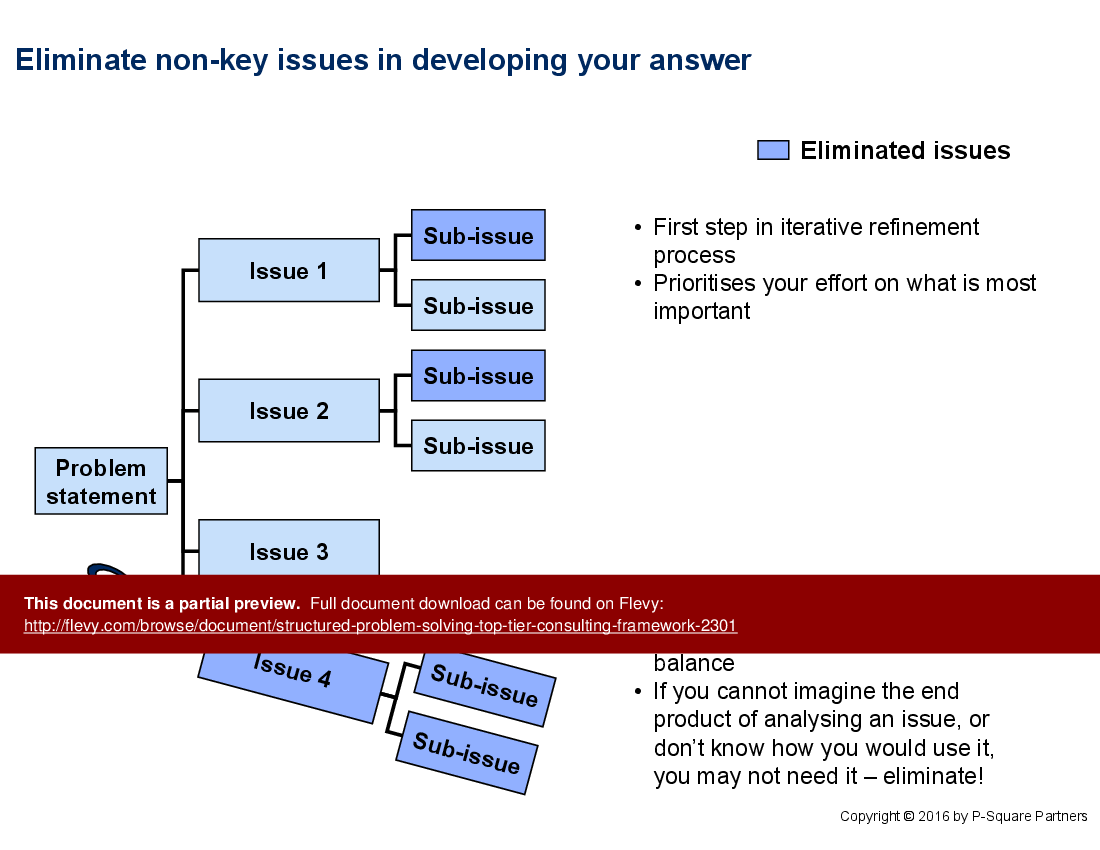
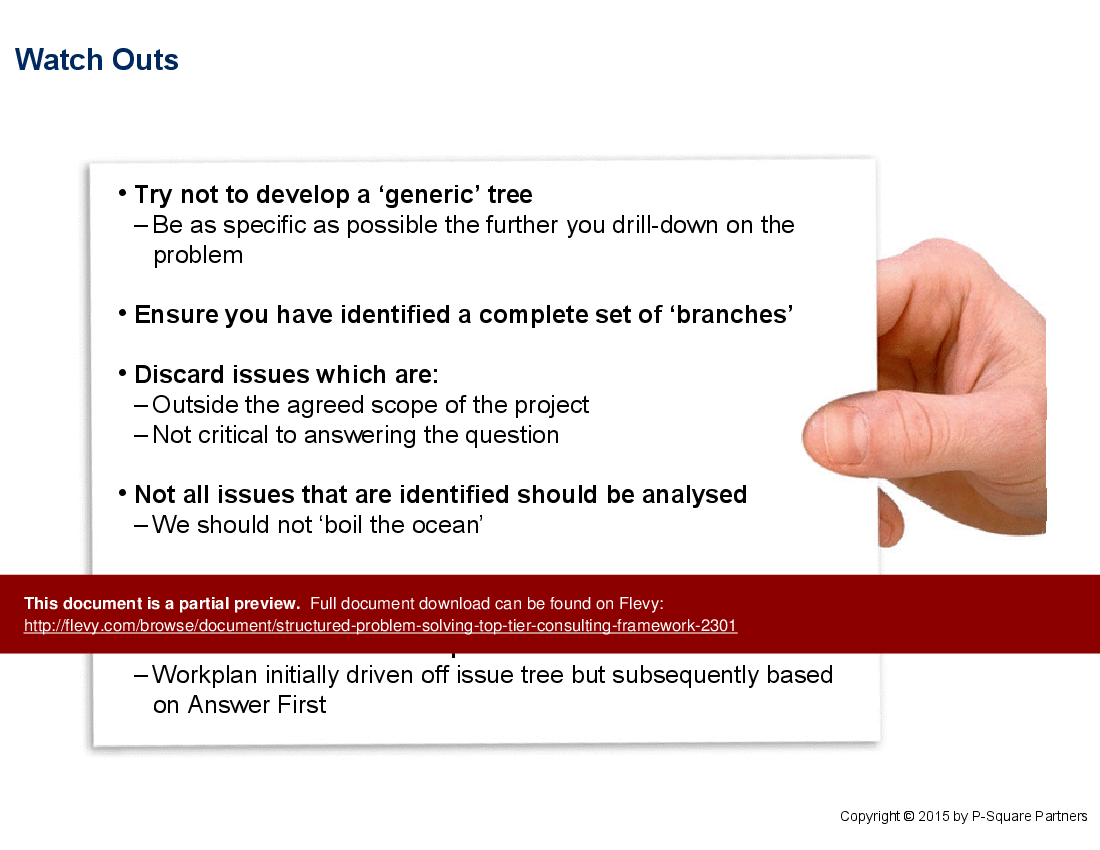
This PPT slide outlines a structured problem-solving approach that emphasizes eliminating non-key issues during analysis. It features a flowchart starting with a central problem statement, branching into key issues and sub-issues in a hierarchical manner. The elimination of non-essential issues is a critical step in the iterative refinement process, focusing on prioritizing significant elements. Managing non-essential issues is vital for balancing work and personal life; if a team cannot visualize the outcome of analyzing an issue, it should be discarded. This methodology streamlines problem-solving and ensures efficient resource allocation, enhancing analytical capabilities and improving decision-making processes.
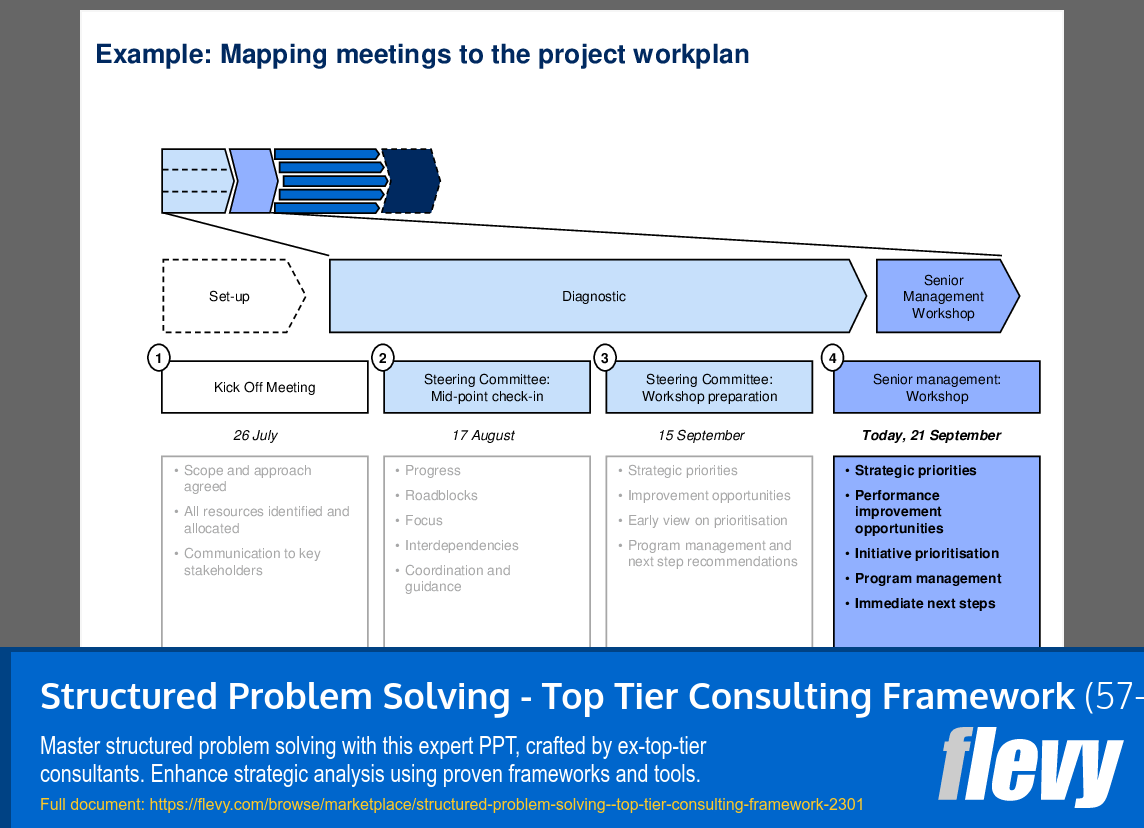
This PPT slide outlines a structured approach to project workplan meetings, highlighting key milestones and objectives. The "Kick Off Meeting" on July 26 focuses on defining project scope, resource allocation, and establishing communication channels with stakeholders. The "Steering Committee: Mid-point check-in" on August 17 serves as a progress review to address roadblocks and maintain focus on objectives. The "Steering Committee: Workshop preparation" on September 15 refines strategic priorities and identifies improvement opportunities for the senior management workshop. Finally, the "Senior Management Workshop" on September 21 discusses strategic priorities, performance improvement opportunities, and actionable next steps, ensuring alignment and effective program management throughout the project.
This PPT slide outlines a structured approach to launching a commercial loans product, focusing on 3 key areas: market demand, client segment attractiveness, and risk management. Strong market demand for commercial loans is highlighted, particularly in the broker-originated small ticket commercial lending market in Australia, indicating significant growth opportunities. The product is positioned as appealing for Mortgages Australia, aligning with strategic goals for new product initiatives. Risk management is addressed, with potential risks identified and mitigating actions suggested, ensuring the initiative is viable and strategically sound. This combination of market insights, strategic alignment, and risk management supports decision-making for the product launch.
This PPT slide illustrates the correlation between research houses in the China market and their rankings in Hong Kong, using a scatter plot. The vertical axis shows Hong Kong share rankings, while the horizontal axis represents the Qualified Foreign Institutional Investor (QFII) quota size, with bubble sizes indicating quota magnitude. Firms like BNP Paribas, Citibank, and Goldman Sachs rank in the top 5 in Hong Kong, demonstrating a strong link between market presence and research capabilities. High rankings in China are typically achieved by firms with substantial QFII quotas and an on-the-ground presence. Firms lacking robust China offerings may struggle with their Hong Kong rankings, as seen with CSFB, which expanded its China products only in 2004. These insights underscore the necessity of integrating China-focused offerings to enhance overall market influence.
Source: Best Practices in Problem Solving, MECE, Bain PowerPoint PowerPoint Slides: Structured Problem Solving - Top Tier Consulting Framework PowerPoint (PPT) Presentation Slide Deck, P-Square Partners
Since 2012, we have provided business templates to over 10,000 businesses and organizations of all sizes, from startups and small businesses to the Fortune 100, in over 130 countries.
"If you are looking for great resources to save time with your business presentations, Flevy is truly a value-added resource. Flevy has done all the work for you and we will continue to utilize Flevy as a source to extract up-to-date information and data for our virtual and onsite presentations!"
– Debbi Saffo, President at The NiKhar Group
"Last Sunday morning, I was diligently working on an important presentation for a client and found myself in need of additional content and suitable templates for various types of graphics. Flevy.com proved to be a treasure trove for both content and design at a reasonable price, considering the time I
saved. I encountered a download issue during the ordering process. However, a quick email to Flevy's support team, even on a Sunday (!!!), resulted in assistance within less than an hour, allowing me to download the content I needed. Fantastic job, Flevy! I give 5 stars for both content/price and customer service. Thank you!
"
– M. E., Chief Commercial Officer, International Logistics Service Provider

"The wide selection of frameworks is very useful to me as an independent consultant. In fact, it rivals what I had at my disposal at Big 4 Consulting firms in terms of efficacy and organization."
– Julia T., Consulting Firm Owner (Former Manager at Deloitte and Capgemini)
"FlevyPro provides business frameworks from many of the global giants in management consulting that allow you to provide best in class solutions for your clients."
– David Harris, Managing Director at Futures Strategy
"Flevy is now a part of my business routine. I visit Flevy at least 3 times each month.
Flevy has become my preferred learning source, because what it provides is practical, current, and useful in this era where the business world is being rewritten.
many challenges and there is the need to make the right decisions in a short time, with so much scattered information, we are fortunate to have Flevy. Flevy investigates, selects, and puts at our disposal the best of the best to help us be successful in our work.
"
– Omar Hernán Montes Parra, CEO at Quantum SFE
"My FlevyPro subscription provides me with the most popular frameworks and decks in demand in today’s market. They not only augment my existing consulting and coaching offerings and delivery, but also keep me abreast of the latest trends, inspire new products and service offerings for my practice, and educate me
in a fraction of the time and money of other solutions. I strongly recommend FlevyPro to any consultant serious about success.
"
– Bill Branson, Founder at Strategic Business Architects
"Flevy is our 'go to' resource for management material, at an affordable cost. The Flevy library is comprehensive and the content deep, and typically provides a great foundation for us to further develop and tailor our own service offer."
– Chris McCann, Founder at Resilient.World
"As an Independent Management Consultant, I find Flevy to add great value as a source of best practices, templates and information on new trends. Flevy has matured and the quality and quantity of the library is excellent. Lastly the price charged is reasonable, creating a win-win value for
the customer, Flevy and the various authors. This is truly a service that benefits the consulting industry and associated clients. Thanks for providing this service.
"
– Jim Schoen, Principal at FRC Group
Save with Bundles
This document is available as part of the following discounted bundle(s):
Receive our FREE whitepaper on the Top 101 Consulting Frameworks
Download our 200+ page guide summarizing the Top 101 Management Consulting Frameworks. Each framework provides a structured approach to analyzing and solving a common business problem.